April 8, 2026
Antonio Vivaldi: April Composer of the Month

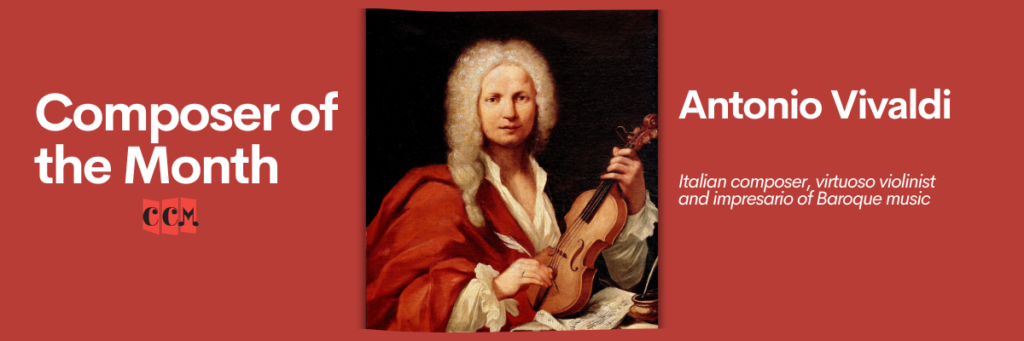
April often brings a sense of renewal and energy. Nature begins to change, and color returns to the world. April is the perfect time to highlight Antonio Vivaldi! His music captures motion, brightness, and vivid imagination.
Vivaldi remains one of the most recognizable composers from the Baroque period. His works feel lively, expressive, and full of character. Moreover, his music often paints clear images through sound. Listeners can hear storms, birds, and flowing water within his pieces.
Many students encounter Vivaldi early in their musical journey. His melodies feel accessible, yet his writing requires strong technique. This balance makes his music both educational and exciting. This is why his works remain popular today.
As April’s Composer of the Month, Vivaldi represents creativity and movement. His music invites listeners to experience the world through sound. Additionally, his story reminds us that strong ideas can leave a lasting impact.
Early Life and Inspirations
Antonio Vivaldi was born in Venice, Italy, in 1678. At the time, Venice stood as a vibrant center of culture and music. The city’s churches, festivals, and public events shaped his early experiences. As a result, he grew up surrounded by music. However, it was largely due to his father, Giovanni Battista Vivaldi, who worked as a violinist at St. Mark’s Basilica, one of Venice’s most important cultural institutions. Through his father’s guidance, Vivaldi received early training on the violin. This foundation quickly developed into strong technical skill and musical awareness.
As a child, he showed both curiosity and discipline, spending time practicing and listening carefully to the performances around him. Living in Venice exposed him to a vibrant musical environment, filled with church music, public performances, and celebrations, all of which shaped his developing musical voice. Over time, these experiences helped him understand both the expressive and structural sides of music.
Although Vivaldi also trained for the priesthood and became known as “The Red Priest,” his health prevented him from fully carrying out his duties. Because of this, he gradually shifted his focus toward music, where he could dedicate his energy more completely. This transition allowed him to immerse himself in both composing and teaching, and ultimately defined the direction of his life’s work.
Together, his early training, his environment in Venice, and his exposure to performance created a strong artistic foundation that continued to influence his music throughout his career.
Vivaldi’s Music Career
Vivaldi’s career developed through a combination of teaching, performing, and composing, all of which reinforced one another. He became a violin teacher at the Ospedale della Pietà in Venice, an institution that cared for orphaned and abandoned girls while also providing them with high-level musical training.
Within this environment, Vivaldi found a unique opportunity to experiment with composition. He wrote a large number of concertos, sacred works, and chamber pieces specifically for his students, who performed them regularly. Because these performances happened often, he could refine his ideas quickly and explore new musical directions with confidence.
As his work spread beyond Venice, publishers began printing his music, and musicians across Europe started performing his compositions. This growing exposure steadily increased his reputation, allowing him to travel and work in other cities. During this time, he also composed operas, which gave him a chance to explore storytelling through music in a more dramatic setting.
However, as musical tastes began to change later in his life, Vivaldi’s popularity declined, and he eventually died in relative obscurity in Vienna. Despite this, his music did not disappear permanently. Instead, it would later return to prominence, gaining recognition as some of the most important work of the Baroque era.
Music and Unique Aspects of Vivaldi’s Style
Vivaldi’s music stands out for its clarity, energy, and strong sense of direction, which together make it both engaging and accessible. He often wrote melodies that feel direct and memorable, allowing listeners to follow the music easily while still appreciating its complexity.
One of his most important contributions lies in the development of the concerto form, particularly the contrast between soloist and orchestra. By highlighting this relationship, he created a sense of dialogue within the music, where the solo instrument could shine while interacting with the larger ensemble. This structure not only adds excitement but also gives the music a clear sense of movement and purpose.
In addition to structure, Vivaldi used rhythm in a distinctive way, often relying on driving patterns that create momentum and energy. These rhythms push the music forward while also shaping its overall form, helping listeners stay engaged from beginning to end.
Another defining aspect of his style involves his use of imagery. Vivaldi frequently wrote music that suggests specific scenes or ideas, using musical gestures to represent natural events or emotional states. Because of this, his music often feels vivid and almost visual, as if it tells a story without words.
His violin writing also reflects his own skill as a performer, as he often included passages that require speed, precision, and control. These technical demands challenge students while also revealing the expressive potential of the instrument.
At the same time, Vivaldi’s music balances simplicity with complexity. While the melodies feel approachable, the underlying structure remains carefully crafted, which contributes to both its educational value and its lasting appeal.
Vivaldi’s Notable Works and Themes
Throughout his life, Vivaldi composed hundreds of works, many of which continue to be performed today. Among these, The Four Seasons stands as his most famous collection, offering a clear example of how music can represent real-world experiences.
Each concerto within the set reflects a different season, using musical ideas to capture specific images and moods. In “Spring,” for example, listeners can hear birds, flowing water, and gentle breezes, creating a light and joyful atmosphere. In contrast, “Summer” introduces tension and dramatic storms, with fast passages that build urgency and intensity.
“Autumn” shifts the mood toward celebration, using dance-like rhythms and lively energy to reflect harvest festivities, while “Winter” presents a colder and more reflective tone, shaped by sharp rhythms and icy textures. These contrasts not only create variety but also demonstrate Vivaldi’s ability to paint detailed scenes through sound.
Vivaldi reinforced these ideas by including written descriptions, or program notes, that connect specific musical passages to real-world images. This approach helps listeners understand the music more clearly while deepening their engagement with it.
Beyond The Four Seasons, Vivaldi wrote many other concertos that explore a wide range of moods, techniques, and expressive possibilities. His sacred works, on the other hand, reveal a more reflective and spiritual side of his writing.
Across all of these compositions, certain themes appear consistently, including nature, movement, and contrast. He often shifts between calm and intensity within a single piece, creating emotional depth and maintaining interest.
Additionally, his emphasis on the relationship between soloist and ensemble continues to influence composers today, showing how his ideas extend far beyond his own time.
Final Thoughts
Antonio Vivaldi remains one of the most influential composers of the Baroque era, and his music continues to inspire both students and performers around the world. Through clear melodies, strong rhythms, and vivid imagery, he created works that feel alive and engaging even today.
His life reflects both success and challenge, as his music gained recognition during his career but faded for a time after his death. However, its later revival confirms the lasting strength of his ideas and the importance of his contributions.
For students, Vivaldi offers both inspiration and practical value. His works help develop technique, musical understanding, and expressive playing, while also demonstrating how music can tell meaningful stories.
At The California Conservatory of Music, we value composers who connect strongly with learners, and Vivaldi’s music provides that connection through its clarity and energy. His compositions encourage students to explore sound with curiosity and confidence.
As we celebrate April, his music reminds us of growth, movement, and renewal. Through his legacy, students continue discovering how music can reflect both the natural world and human expression.
Sign up for a FREE introductory music lesson at The California Conservatory of Music today!