
December 3, 2025
Pyotr Ilyich Tchaikovsky: December Composer of the Month

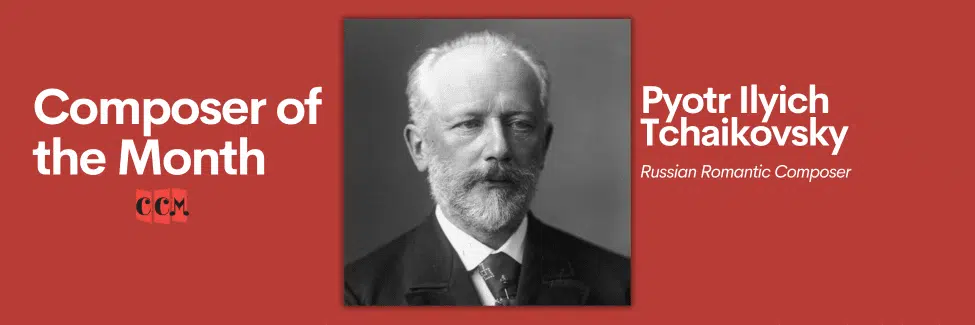
December brings a season filled with joy, reflection, and celebration. It also brings music that feels magical, warm, and full of emotion. Few composers capture the spirit of this month as beautifully as Pyotr Ilyich Tchaikovsky, whose works continue to shine during the holiday season. His music carries energy, elegance, and heartfelt storytelling. Moreover, his pieces appear in concerts, ballets, films, and homes around the world.
Tchaikovsky stands as one of the most recognizable names in classical music. His melodies linger long after they finish, and his emotional depth leaves audiences moved and inspired. His ability to write music that feels both grand and intimate sets him apart from many other composers. Furthermore, his legacy continues to grow as new generations discover his work each year.
This month, we explore the life, music, and legacy of Pyotr Ilyich Tchaikovsky. We’ll dive into his early inspirations, his powerful career, the qualities that shaped his sound, and the timeless works that still bring audiences joy today.
Early Life and Inspirations
Pyotr Ilyich Tchaikovsky was born on May 7, 1840, in Votkinsk, Russia. His family valued culture and education. His mother played the piano, and her influence shaped his early love for music. Tchaikovsky began piano lessons at age five and showed great interest from the start. He loved melodies, and he memorized songs with ease. His childhood, however, carried both warmth and sadness. He adored his mother, and her affection shaped his sensitive personality. Tragically, she passed away when he was fourteen, and her death affected him deeply. This early loss brought emotional complexity that later appeared in his music. Ultimately, it fueled a need for expression that stayed with him throughout his life.
Tchaikovsky’s early education led him toward a legal career. He attended the Imperial School of Jurisprudence in St. Petersburg, where he trained for civil service work. Yet even during these years, he felt drawn to music. He played piano whenever he could and listened intently to concerts. Music gave him comfort and focus. Eventually, he followed that passion. At age twenty-one, he enrolled in the newly founded Saint Petersburg Conservatory. There, he studied harmony, composition, and orchestration. His teachers recognized his talent and encouraged him to pursue a professional path. Furthermore, the Conservatory exposed him to Western European musical traditions, which later blended with his Russian roots to create his iconic style.
Tchaikovsky’s Music Career
Tchaikovsky’s career developed quickly once he graduated from the Conservatory. He accepted a teaching position at the Moscow Conservatory, where he taught harmony and composition. He worked long hours, wrote constantly, and built relationships with performers, musicians, and patrons. His early pieces received mixed reviews, but he never lost determination.
His breakthrough came with his First Symphony, Winter Daydreams. The work showed his gift for melody and emotional storytelling. It also revealed his ability to create rich orchestral colors. His confidence grew as audiences began to connect with his music. Additionally, his friendships with musicians and supporters gave him the stability he needed to focus on composing.
Throughout his career, he wrote symphonies, concertos, operas, chamber pieces, and ballets. His music reached audiences in Russia and across Europe. He also traveled frequently and led performances in many countries. His tours helped him gain international recognition and respect. Soon after, he became one of the first Russian composers welcomed widely in Western Europe. Despite his success, he faced moments of insecurity. He worried about public reaction and sometimes doubted his own abilities. Nevertheless, he continued to write with courage and emotional honesty. His passion for music always pulled him forward. Furthermore, his ability to translate deep emotion into sound made his work stand out during a time filled with other great composers.
Music and Unique Aspects
Tchaikovsky’s music carries emotional intensity that listeners recognize instantly. His melodies soar with beauty and sincerity. His harmonies blend sorrow and hope in a way that feels both personal and universal. Furthermore, he uses rhythm and orchestration to create movement, atmosphere, and dramatic impact.
One unique quality of his style is his ability to write vivid musical stories. You can feel the emotions of each character in his ballets and operas. You can hear the struggle, triumph, and longing in his symphonies. His music paints pictures, even without words. Additionally, his gift for using the orchestra in the way that a painter uses color, gives his pieces depth and richness.
Tchaikovsky also had a special talent for dance music. His ballets changed the way composers wrote for the stage. Before Tchaikovsky, ballet scores often served mainly as background accompaniment. He transformed them into full musical experiences that stood on their own. His ballets now remain some of the most loved works in the classical world. Moreover, his writing blends Russian folk influences with Western European forms. This mixture created a new sound that felt both grounded and sweeping. His melodies often reflect the contours of folk songs. His structures sometimes follow German traditions. This blend helped shape Russian classical music as a whole.
Another unique aspect is the emotional honesty within his compositions. He never hid his feelings. He wrote openly about heartbreak, beauty, longing, and joy. This vulnerability gives his music depth and makes it resonate with listeners of all ages.
Tchaikovsky’s Notable Works and Themes
Tchaikovsky wrote many pieces that remain central to the classical repertoire. His Nutcracker Suite brings joy to audiences every December. The ballet’s music, filled with dances like “Waltz of the Flowers” and “Dance of the Sugar Plum Fairy,” captures the enchantment of childhood wonder. The warmth of this score makes it a holiday tradition around the world.
Another beloved work is Swan Lake, which tells a tragic and beautiful story through masterful themes. The sweeping main melody remains one of the most recognizable in all of classical music. Furthermore, the ballet’s emotional depth showcases Tchaikovsky’s unmatched gift for writing expressive music for dance.
Tchaikovsky’s Symphony No. 6, known as the Pathétique, stands as one of his most powerful pieces. It blends sadness, hope, and introspection. Many listeners feel a deep connection to its final movement, which closes with quiet reflection instead of triumphant joy. This choice shows Tchaikovsky’s willingness to explore complex emotional landscapes.
His Piano Concerto No. 1 also remains a favorite among students, professionals, and audiences. The opening chords create immediate energy and excitement. The concerto blends technical brilliance with heartfelt expression. Additionally, it helped establish Tchaikovsky as a major composer on the international stage.
Tchaikovsky also wrote beautiful chamber music, operas, and songs. Works like Eugene Onegin demonstrate his lyrical talent and sensitivity to human drama. Themes of love, loss, passion, and resilience appear throughout his music. These themes connect strongly with listeners because they reflect real human experiences.
Final Thoughts
Pyotr Ilyich Tchaikovsky remains one of the most treasured composers in history. His music brings joy, comfort, and inspiration to people around the world. His ability to express deep emotion sets him apart from many other composers of his time. Furthermore, his works continue to shape holiday traditions, dance performances, and classical music education.
His life shows how personal expression can lead to lasting impact. He wrote with honesty, heart, and courage. His melodies captured the emotions that words often struggle to express. Moreover, his blend of Russian and Western styles created a sound that defined his era and still resonates today.
As we celebrate him as our December Composer of the Month, we also celebrate the timeless beauty of his music. Students and families can learn from his dedication, creativity, and emotional openness. His work reminds us that music holds the power to move us, to inspire us, and to bring us together year after year.
Sign up for a FREE music lesson at The California Conservatory of Music today!
