March 5, 2026
Why Learning an Instrument Feels a Lot Like Learning a Language

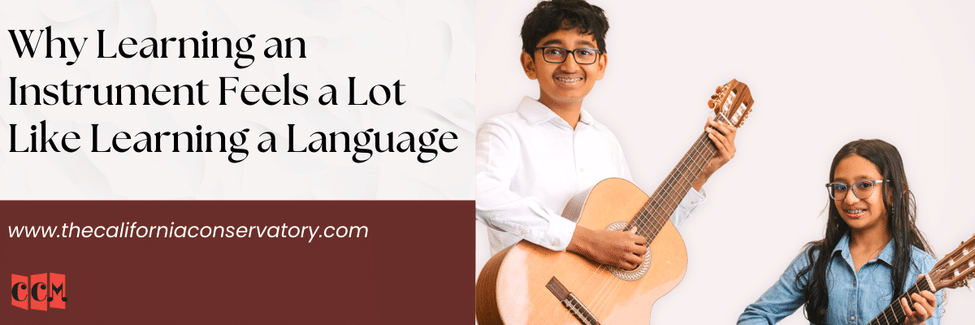
Many parents notice surprising similarities between music and language. Both require listening, repetition, and gradual mastery. Furthermore, both skills develop through steady exposure over time. Because of this, learning an instrument often resembles the process of learning a new language.
Young children rarely learn language through memorization alone. Instead, they absorb patterns through daily interaction, listening, and practice. Similarly, music students develop skills through repeated listening and active playing. These repeated experiences slowly strengthen musical understanding.
Moreover, both music and language activate complex brain systems. Scientists often describe music as another form of communication. Notes, rhythms, and phrasing carry meaning just like spoken words. In fact, musicians often describe music as a language of emotion.
Parents sometimes expect quick progress during early lessons. However, both language and music develop through consistent effort. Gradual improvement builds lasting skill and confidence. When families understand this process, practice begins to feel more purposeful.
At The California Conservatory of Music, teachers guide students through this journey carefully. Each lesson builds new skills while reinforcing previous ideas. Over time, students develop fluency in musical expression.
The Brain Processes Music and Language in Similar Ways
Researchers have studied the brain’s response to music for decades. Many studies reveal strong connections between music and language processing. In fact, several brain regions handle both skills simultaneously. When a child listens to music, the brain analyzes rhythm, pitch, and timing. Similarly, language requires recognition of tone, emphasis, and speech patterns. These overlapping processes explain why music strengthens communication skills.
Furthermore, musicians often show stronger auditory memory. They learn to hear small changes in pitch and rhythm. This attention to detail improves listening ability overall. Strong listening skills also support language comprehension. Additionally, music training encourages pattern recognition. Musical phrases contain repeated structures and predictable sequences. Language contains similar patterns through grammar and sentence structure. As a result, music study strengthens the brain’s ability to detect patterns.
Moreover, music practice strengthens connections between the brain’s hemispheres. This process improves coordination between analytical and creative thinking. Students benefit from stronger focus, memory, and problem-solving ability. These neurological benefits help explain why music education supports academic development. Students do not simply learn notes and rhythms. They train their brains to process information more efficiently.
Repetition Builds Fluency
Language learners rarely achieve fluency without repetition. Children repeat words, phrases, and sentences many times. Through this process, vocabulary becomes natural and automatic. The same principle applies to learning an instrument. Students practice scales, exercises, and musical passages repeatedly. At first, the process may feel slow or mechanical. However, repetition gradually builds control and confidence. Eventually, the music begins to flow naturally.
Furthermore, repetition strengthens muscle memory. Fingers learn how to move efficiently across keys or strings. These movements eventually become automatic responses. As a result, students focus more on expression and interpretation. Additionally, repetition strengthens mental familiarity with musical patterns. Students begin recognizing chords, rhythms, and melodic shapes quickly. This recognition resembles the way readers recognize familiar words. Over time, reading music becomes easier and faster.
Parents sometimes worry when practice feels repetitive. However, repetition forms the foundation of musical growth. Language learners repeat phrases daily without frustration. Music students benefit from the same patient approach. When students repeat material thoughtfully, improvement often appears suddenly. What once felt difficult becomes comfortable and natural. These breakthroughs create motivation and excitement.
Listening Plays a Central Role
Listening drives language development from the earliest years. Babies absorb language long before speaking their first words. They hear patterns, rhythms, and speech sounds daily. Eventually, these patterns form the basis for communication. Music follows a similar process. Listening carefully helps students internalize rhythm, tone, and phrasing. Before playing confidently, students must first recognize musical sounds clearly. Strong listening skills guide every stage of musical development.
Furthermore, listening helps students understand musical style. A classical piece requires different expression than a jazz melody. Students absorb these differences through careful listening experiences. This process strengthens musical awareness. Additionally, listening helps students evaluate their own playing. Musicians constantly compare their sound to the written music. They adjust timing, tone, and articulation accordingly. This habit strengthens critical thinking and self-reflection.
Parents can support this process easily at home. Simply playing music during daily routines builds familiarity. Students begin recognizing instruments, melodies, and musical structures. These listening experiences enrich formal lessons. Over time, listening transforms passive hearing into active understanding. Students begin anticipating musical phrases and patterns. This ability resembles how fluent speakers anticipate language structure.
Small Steps Lead to Big Progress
Language development rarely occurs overnight. Children build vocabulary gradually through daily conversation. Each new word expands their ability to communicate. Similarly, musical progress develops through small, consistent steps. During the early stages, students focus on simple musical tasks. They learn note names, rhythms, and basic technique. These foundational skills may seem small individually. However, together they form a strong musical framework.
Consistent practice allows these skills to grow steadily. Students revisit familiar concepts while adding new challenges. This balance helps them maintain confidence and motivation. Plus, gradual progress prevents frustration. Large leaps often create confusion and discouragement. Small steps allow students to experience frequent success. Each success strengthens motivation.
Teachers carefully guide this process during lessons. They introduce new material at the appropriate pace. This thoughtful structure mirrors effective language instruction. Eventually, students combine many small skills into complex musical expression. A once-simple exercise becomes part of a full musical performance. These moments highlight the power of steady progress.
Why Consistency Matters
Consistency shapes both language learning and musical growth. Children hear language daily and practice speaking often. These regular experiences reinforce vocabulary and grammar naturally. Music learning follows the same principle. Short, consistent practice sessions build stronger habits than occasional long sessions. Regular engagement keeps musical ideas fresh in the mind.
Ultimately, consistent practice builds confidence gradually. Students notice improvement week after week. This steady progress encourages continued effort, and strengthens discipline and time management. Students learn how to work toward long-term goals, and these skills benefit many areas of life beyond music.
Parents play an important role in establishing these routines. Encouragement and gentle reminders support consistent practice. Positive reinforcement keeps the process enjoyable. Over time, these routines transform effort into habit. Students begin approaching their instrument naturally and confidently. This habit forms the foundation for lifelong musicianship.
Final Thoughts
Music and language share remarkable similarities. Both require listening, repetition, and gradual mastery. Both activate complex brain systems that support communication and creativity. Because of these connections, learning an instrument strengthens many important cognitive skills. Students develop listening ability, pattern recognition, and memory. They also build patience and resilience through steady practice.
At The California Conservatory of Music, teachers guide students through each stage carefully. Lessons build strong technical skills while encouraging curiosity and expression. Over time, students develop musical fluency just as language learners develop speech fluency.
Parents often notice meaningful changes in their children during this journey. Students gain confidence, focus, and perseverance. These qualities extend far beyond the music studio. Ultimately, music education offers far more than performance ability. It shapes the way students think, listen, and communicate. When families embrace the process, learning an instrument becomes a powerful lifelong skill.
Schedule your FREE introductory music lesson at The California Conservatory of Music today!