
Joe Hisaishi: May Composer of the Month
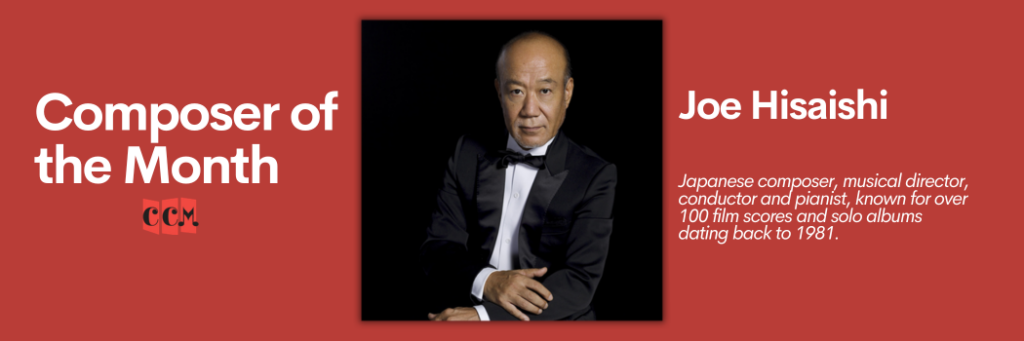
Every great story needs a voice that speaks without words. For millions of fans of Japanese cinema, that indispensable voice belongs to the incomparable Joe Hisaishi. We are thrilled to introduce him as our featured composer of the month for May. His music possesses a rare power that carries us toward floating castles and through ancient, hidden forests. He blends the rigid discipline of classical tradition with the bold spirit of modern innovation. Throughout his long career, his melodies have managed to capture the very essence of complex human emotion. Listeners around the world can recognize his signature, crystalline piano style within just a few notes. We take this month to celebrate his massive contributions to the global world of art and sound.
Early Life and Inspirations
The man the world knows as Joe Hisaishi actually entered this world as Mamoru Fujisawa in 1950. He grew up surrounded by the lush, scenic landscapes of the city of Nagano in Japan. Music first entered his life at the tender age of five when he began his first violin lessons. This early exposure sparked a deep passion that eventually led him to the Kunitachi College of Music. While studying composition there, he discovered a profound fascination with the minimalist movement of the time. The repetitive, hypnotic works of artists like Steve Reich and Philip Glass deeply influenced his creative philosophy.
During this formative period, he also decided to craft a professional identity that reflected his global ambitions. He chose the stage name “Joe Hisaishi” as a clever tribute to the legendary American producer Quincy Jones. If you write the name “Quincy Jones” in Japanese kanji, the characters can also sound like “Hisaishi.” This blend of Eastern heritage and Western pop-culture appreciation helped define his unique creative path from the start. He refused to limit himself to just one genre or style during these early years. Instead, he absorbed every sound he encountered to build a foundation for his future masterpieces. This diverse education allowed him to approach music with a perspective that few other composers could match.
Hisaishi’s Career: Collaboration and Innovation
His professional journey truly gained momentum in the late 1970s through small television animations and experimental solo albums. However, his life changed forever in 1984 during the production of Nausicaä of the Valley of the Wind. This project sparked a legendary partnership with the visionary director Hayao Miyazaki and Studio Ghibli. Together, these two masters transformed the landscape of animated film music for generations to come. Hisaishi also found success collaborating with the gritty, avant-garde filmmaker “Beat” Takeshi Kitano. He wrote iconic, minimalist scores for Kitano’s masterpieces like Kikujiro and the intense crime drama Hana-bi.
Beyond the silver screen, Hisaishi maintains an incredibly productive career as a prolific solo artist and conductor. He has released nearly 40 solo albums that showcase his evolving style and technical mastery. His recent signing with the prestigious Deutsche Grammophon label further cemented his status as a titan of modern music. This partnership brought his famous symphonic celebrations to massive, adoring audiences across every continent. He continues to prove that film music can stand alone as high art in the greatest concert halls. His career serves as a testament to the power of finding the right creative partners. Through these bonds, he has built a body of work that defines the sound of modern Japan.
The Unique Architecture of the Hisaishi Sound
Several distinct and fascinating elements make a Hisaishi score stand out from any other contemporary work. He masterfully combines rigid Western classical structures with the delicate, flowing sensibilities of Japanese melody. One can often hear the shimmering influence of French Impressionism woven throughout his most popular orchestral arrangements. He consistently uses the piano as the emotional heart and primary storyteller of his musical landscapes. The minimalist technique of repetition allows him to build tension and provide emotional release with incredible precision.
Furthermore, Hisaishi often integrates modern electronic synthesizers alongside traditional, soaring orchestral instruments to create a hybrid sound. This careful mix produces a soundscape that feels both excitingly futuristic and deeply nostalgic at the same time. He places a heavy focus on the Japanese concept of “Ma,” which refers to the intentional empty space between notes. This technique gives his music a distinct breathing quality that mirrors the natural rhythm of human life. Moreover, his ability to write simple yet profound melodies makes his work accessible to people of all ages. He does not rely on overly complex academic structures to impress his listeners. Instead, he speaks directly to the heart through clarity and deliberate sonic choices.
Notable Works and Recurring Themes
His vast discography contains some of the most beloved and recognizable themes in the history of global cinema. The world of My Neighbor Totoro features a whimsical, bouncy title track that perfectly captures childhood joy. In contrast, his score for Spirited Away offers a haunting sense of wonder mixed with a deep feeling of loss. The track “One Summer’s Day” remains one of the most frequently streamed piano pieces on digital platforms today. In the epic Princess Mononoke, he utilizes powerful percussion to represent the violent struggle of nature.
Recurring themes in his work often include the preservation of childhood innocence and the majesty of the environment. He frequently explores the philosophical concept of “mono no aware,” which describes the beautiful pathos of fleeting things. This bittersweet feeling defines the emotional core of many Studio Ghibli films and resonates with audiences everywhere. Additionally, his work for Howl’s Moving Castle centers on a stunning, revolving waltz that mimics the movement of the castle. These pieces do far more than simply support the visuals on the screen; they tell their own independent stories. Each note carries the weight of the characters’ dreams, fears, and ultimate growth.
The Enduring Legacy of Joe Hisaishi
Joe Hisaishi continues to inspire new generations of aspiring musicians and film fans across the world today. He recently composed a delicate and haunting score for the Oscar-winning film The Boy and the Heron. Even as he approaches his mid-seventies, his creative energy shows absolutely no signs of slowing down or fading. He regularly conducts sold-out symphonic concerts where he brings his movie magic to life for live audiences. Many fans travel thousands of miles just to witness him lead an orchestra with his energetic baton.
His music transcends narrow cultural barriers and speaks to the universal soul of the human experience directly. We are truly honored to name him our official composer of the month. His massive legacy will undoubtedly echo through the halls of music history for many decades to come. We hope his work encourages you to find the magic in your own daily life and surroundings. Thank you for joining us as we celebrate the life and career of this true musical visionary. Keep listening, keep dreaming, and let the melodies of Hisaishi guide your imagination.
Sign up for a FREE introductory music lesson at The California Conservatory of Music today!
Piano Student of the Month: Defne Esin

For the month of April, we happily featuring piano student, Defne Esin, as our Student of the Month! Defne has been taking piano lessons at our Sunnyvale location for over 2 and a half years! She currently studies with Dr. Hyun!
Dr. Hyun says that Defne always stays motivated and eager to learn new songs. Hyun remains very impressed with Defne’s steady progress!
Read more about Defne’s experience at CCM below!
Student of the Month Questionnaire – Defne Esin
What is your name?
Defne Esin
How old are you?
8
Who is your teacher?
Dr. Hyun
How long have you been taking piano lessons?
Since I was 5 years old
What advice would you give to a piano student just starting at CCM?
Work hard, practice daily, listen to your teacher and your parents, and have fun!!!
What piece are you looking forward to learning someday?
Harry Potter starter-hard version
What is your favorite thing about playing piano?
I love how the music flows through my body. Playing any songs-scary, sad, exciting, it doesn’t matter what theme-makes me, just, you know, feel better.
What is your favorite food?
CHOCOLATE!:)
Do you have a pet?
No
Do you play any sports or do any other activities outside of music lessons?
Soccer, art, writing, reading, and knitting. I love cuddling up and doing one of my favourite hobbies.
What do you want to be when you grow up?
Many things: Artist, scientist, author, and pianist;)
What is your most memorable experience at CCM?
When I did my first recital at age five, and played ‘Old McDonald.’
Watch Defne perform Interstellar Main Theme by Hans Zimmer at the latest recital!
Parent Spotlight – Melek Pelen
Regarding piano instruction, what are you most proud of your child accomplishing?
I am most proud of her when she played Interstellar at her last recital. The pace was a little fast for her, and some of the notes were far apart, making the hand stretches challenging for her fingers. But she didn’t give up and kept practicing until she got it right.
What advice would you give a new parent starting in the program?
Don’t give up if you see slow progress, it takes a while, but then one day you wake up to a very nice live piano playing in the background of your house.
Why did you decide to give your child a musical upbringing?
I want her to play music as a way to disconnect from the flow of life and feel recharged.
Sign up for a FREE introductory music lesson at The California Conservatory of Music today!
Mitsuko Uchida: April Musician of the Month

For the month of March, the California Conservatory of Music proudly honors the incomparable Mitsuko Uchida. She remains one of the most revered classical pianists of our modern era. Her performances offer more than just technical brilliance. They provide a deep, spiritual journey into the heart of the repertoire. Audiences around the world recognize her signature style immediately. She balances intense intellectual rigor with a delicate, poetic touch. Her dedication to her craft has earned her countless awards and a loyal global following. We invite you to explore the life and artistry of this extraordinary woman. Her story serves as an inspiration to every student of music. Through her, we see how discipline transforms into pure, unadulterated magic on stage.
Early Life and Inspirations
Mitsuko Uchida was born in 1948 in Atami, a seaside town near Tokyo, Japan. Her parents were not professional musicians, but they valued culture and education deeply. She began her piano studies at a very young age in Japan. However, a major shift occurred when she turned twelve years old. Her father moved the family to Vienna, Austria, to serve as the Japanese ambassador. This move placed young Mitsuko at the very epicenter of the Western classical tradition. She enrolled at the Vienna Academy of Music to further her training. There, she studied under great mentors like Richard Hauser. These early years in Vienna shaped her fundamental understanding of music. She breathed the same air as the ghosts of Mozart, Beethoven, and Schubert. This immersion provided her with a unique perspective on the Austro-German canon. She did not just learn the notes, she absorbed the culture that created them. Her teachers encouraged her to seek the truth behind every score. This quest for musical honesty became the guiding light of Uchida’s life.
Uchida’s Stellar Musical Career
Uchida’s professional rise did not happen overnight. She took her time to mature as an artist before seeking the global spotlight. In 1969, she won first prize in the Beethoven Competition in Vienna. A year later, she placed second in the prestigious International Chopin Piano Competition. These victories signaled the arrival of a major new talent on the world stage. However, she chose to settle in London rather than return to Japan or stay in Vienna. London offered her the creative freedom she craved to develop her own voice. During the 1980s, Uchida undertook a monumental project that defined her career. She performed and recorded the complete cycle of Mozart’s piano sonatas. This feat earned her universal acclaim and established her as a premier Mozart interpreter. She later repeated this success with the Mozart piano concertos alongside the English Chamber Orchestra. Her career continued to soar as she explored the works of Schubert and Beethoven. Uchida also served as the artistic director of the Marlboro Music School and Festival. This role allowed her to mentor the next generation of talented performers. Today, she continues to perform with the world’s leading orchestras and conductors.
The Unique Artistry of Uchida
Mitsuko Uchida’s specific sonic palette sets her apart from other pianists. She possesses an uncanny ability to make the piano sing with a crystalline clarity. Her touch is often described as “luminous” or “ethereal” by critics and fans alike. She approaches each piece with a scholar’s mind and a poet’s heart. Before she touches a key, she spends hours analyzing the structure of the composition. She wants to understand every harmonic shift and melodic fragment. This intellectual preparation allows her to play with incredible intentionality. Furthermore, her physical presence at the piano is deeply expressive and focused. She often hums softly or moves with a fluid, dance-like grace while she plays. This shows her total immersion in the emotional world of the music. She also champions modern composers alongside the great masters of the past. Her interpretations of Schoenberg and Berg show her range and technical command. She refuses to settle for easy or superficial performances. Instead, she searches for the vulnerability and humanity within the notes. This honesty creates a powerful connection between her and her audience.
Expanding Uchida’s Musical Narrative
In fact, Uchida’s influence extends far beyond her solo recitals. She believes that music is a collaborative and living art form. Her work with chamber ensembles reveals her deep listening skills and humility. She never seeks to dominate the other musicians on the stage. Instead, she weaves her sound into the collective fabric of the group. This collaborative spirit is why many consider her a “musician’s musician.” Moreover, she maintains a very selective schedule to ensure high quality. She chooses her projects based on her genuine interest and artistic growth. This integrity is rare in the fast-paced world of the modern music industry. Her recordings for the Philips and Decca labels remain benchmarks for students everywhere. When you listen to her Schubert, you feel the profound loneliness and beauty of his soul. When you hear her Debussy, you see colors you never knew existed in sound. She uses the pedals of the piano to create subtle washes of tone. These techniques require immense control and a very sensitive ear. She has spent decades perfecting these minute details of her craft.
A Legacy of Excellence
Uchida’s contributions to music have not gone unnoticed by the global community. The British Crown named her a Dame Commander of the Order of the British Empire. This title reflects her massive impact on the cultural life of the United Kingdom. She also received the Praemium Imperiale from the Japan Art Association. Despite these grand honors, she remains a deeply humble and private person. She often says that she is still learning and growing as a pianist. This “student mindset” is perhaps her greatest lesson for us all. Even a master believes there is always more to discover within a score. She practices for hours every day to maintain her connection to the instrument. Her dedication shows that true greatness requires both talent and tireless work.
In conclusion, the world of classical music is richer because of Mitsuko Uchida. She has given us decades of unforgettable performances and recordings. Her focus on the “Second Viennese School” brought modern music to a wider audience. She proved that complex music could still be deeply moving and accessible. Uchida finds new meanings in pieces she has played for fifty years. This reminds us that a masterpiece is an endless well of inspiration.
Sign up for a FREE introductory music lesson at The California Conservatory of Music today!
Early Life Skills Kids Gain from Learning Music
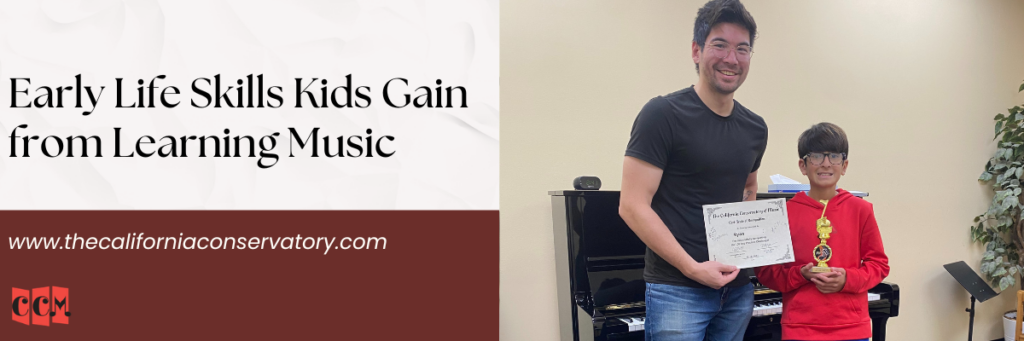
Music is more than a fun after-school activity. It shapes how children think, feel, and grow. As students continue learning, they build habits and abilities that extend far beyond the instrument. These early life skills begin to influence school, friendships, and confidence.
At The California Conservatory of Music, we see this transformation every day. A student may start with basic notes and rhythms. Over time, they begin to focus longer, solve problems independently, and express themselves more clearly.
This is the real value of learning music. It creates a foundation for growth that lasts well beyond childhood.
Why Music Builds Early Life Skills
When children engage with music, they use both their minds and emotions at the same time. This combination makes learning especially powerful. Instead of memorizing isolated facts, students connect ideas through sound, movement, and feeling. For example, a student reading music must track rhythm, pitch, and hand placement all at once. This type of multitasking strengthens focus and coordination. Over time, these abilities become natural and transferable to other areas.
Music also encourages awareness. Students must listen carefully, adjust their playing, and respond in real time. This constant feedback loop builds strong thinking habits. Additionally, music provides a structured path for growth. Students work toward clear goals, such as mastering a piece or preparing for a recital. Each step builds confidence and reinforces effort. Because of this, learning music becomes one of the most effective ways to develop early life skills in a meaningful and lasting way.
Disciplined Skills: Patience, and Consistency
One of the first changes parents notice is an improvement in discipline. Progress in music does not happen instantly. Students must return to the same material again and again. At first, this repetition may feel slow. However, it teaches an important lesson. Improvement comes through consistent effort, not quick results. Over time, students begin to accept this process.
Patience naturally develops alongside discipline. A child who once rushed through practice begins to slow down and focus. They learn to break difficult tasks into smaller steps. This approach reduces frustration and builds confidence. Eventually, discipline becomes internal rather than external. Students no longer practice only because they are told to. They begin to take pride in their progress. These habits extend into schoolwork, sports, and daily routines. Discipline becomes part of how they approach challenges in general.
Memory Skills: Focus, and Mental Clarity
Music also strengthens important cognitive skills. Students must remember notes, rhythms, and sequences while playing. This constant recall improves memory over time. At the same time, music demands sustained focus. A student cannot play successfully while distracted, they must stay present and attentive. This type of concentration becomes easier with practice.
Music also trains the brain to recognize patterns. Musical phrases repeat and evolve in predictable ways. This pattern recognition supports logical thinking and problem-solving. As a result, learning music strengthens the mind in a way that feels natural and engaging.
Listening Skills: Communication, and Awareness
Strong listening skills form the foundation of both music and communication. In lessons, students learn to hear small details. They notice pitch differences, rhythm accuracy, and tone quality. This level of attention carries into everyday life. Students become better listeners during conversations. They respond more thoughtfully and communicate more clearly.
Music also teaches non-verbal communication. In group settings, students watch and respond to others. They learn to stay in sync without constant direction. This builds awareness and teamwork. Additionally, music allows children to express emotions without words. A piece can feel joyful, calm, or intense. Students learn to shape their playing to match these emotions. This emotional awareness supports healthy development. It helps children understand both themselves and others more deeply.
Artistic Skills: Creativity, Confidence, and Expression
Moreover, music provides a safe space for creativity. Students explore sound, phrasing, and interpretation. Even simple pieces offer room for personal expression. At first, students focus on playing correctly. Over time, they begin to think about how the music should feel. This shift builds artistic awareness.
Furthermore, confidence grows naturally through this process. Each completed piece represents progress, and each lesson builds a sense of accomplishment. Performance opportunities take this growth even further. Standing in front of an audience challenges students in new ways. However, it also gives them a chance to succeed publicly. After performing, students often feel a strong sense of pride. This experience reinforces their confidence and encourages continued effort.
Resilience: Problem-Solving, and Growth
Mistakes are a constant part of learning music. Students miss notes, lose rhythm, and struggle with new techniques. However, these moments become valuable learning opportunities. Instead of avoiding difficulty, students learn to face it directly. They identify the problem and work through it step by step. This builds problem-solving skills that apply to many situations.
Resilience also develops during this process. A challenging passage may take several days to master. Students learn to keep trying even when progress feels slow. Over time, they begin to see mistakes differently. Instead of feeling discouraged, they recognize mistakes as part of growth. This mindset becomes incredibly powerful. These early life skills help students approach challenges with confidence rather than fear.
Time Management and Responsibility
Balancing music with school and other activities teaches valuable life skills. Students must decide when to practice and how to use their time. This responsibility encourages planning and organization. A student who practices regularly learns how to manage multiple priorities.
Parents often notice improvements in daily habits. Students become more consistent with homework and routines. They learn how to follow through on commitments. Music also teaches long-term goal setting. Preparing for a recital or learning a piece requires planning over weeks or months. This process builds patience and responsibility. These habits prepare students for future academic and personal success.
Final Thoughts
Music lessons offer far more than technical skill. They shape how children think, work, and express themselves. Through consistent practice, students develop discipline, focus, and resilience. They also gain confidence, creativity, and strong communication skills. These early life skills extend into every part of life.
At The California Conservatory of Music, we believe in this broader impact. We see students grow not only as musicians but as individuals. By introducing music into your child’s life, you provide more than an activity. You offer a foundation for lifelong success.
Over time, those small daily practice moments become something much greater. They become the building blocks of confidence, independence, and growth.
Sign up for a FREE introductory music lesson at The California Conservatory of Music!
Antonio Vivaldi: April Composer of the Month

April often brings a sense of renewal and energy. Nature begins to change, and color returns to the world. April is the perfect time to highlight Antonio Vivaldi! His music captures motion, brightness, and vivid imagination.
Vivaldi remains one of the most recognizable composers from the Baroque period. His works feel lively, expressive, and full of character. Moreover, his music often paints clear images through sound. Listeners can hear storms, birds, and flowing water within his pieces.
Many students encounter Vivaldi early in their musical journey. His melodies feel accessible, yet his writing requires strong technique. This balance makes his music both educational and exciting. This is why his works remain popular today.
As April’s Composer of the Month, Vivaldi represents creativity and movement. His music invites listeners to experience the world through sound. Additionally, his story reminds us that strong ideas can leave a lasting impact.
Early Life and Inspirations
Antonio Vivaldi was born in Venice, Italy, in 1678. At the time, Venice stood as a vibrant center of culture and music. The city’s churches, festivals, and public events shaped his early experiences. As a result, he grew up surrounded by music. However, it was largely due to his father, Giovanni Battista Vivaldi, who worked as a violinist at St. Mark’s Basilica, one of Venice’s most important cultural institutions. Through his father’s guidance, Vivaldi received early training on the violin. This foundation quickly developed into strong technical skill and musical awareness.
As a child, he showed both curiosity and discipline, spending time practicing and listening carefully to the performances around him. Living in Venice exposed him to a vibrant musical environment, filled with church music, public performances, and celebrations, all of which shaped his developing musical voice. Over time, these experiences helped him understand both the expressive and structural sides of music.
Although Vivaldi also trained for the priesthood and became known as “The Red Priest,” his health prevented him from fully carrying out his duties. Because of this, he gradually shifted his focus toward music, where he could dedicate his energy more completely. This transition allowed him to immerse himself in both composing and teaching, and ultimately defined the direction of his life’s work.
Together, his early training, his environment in Venice, and his exposure to performance created a strong artistic foundation that continued to influence his music throughout his career.
Vivaldi’s Music Career
Vivaldi’s career developed through a combination of teaching, performing, and composing, all of which reinforced one another. He became a violin teacher at the Ospedale della Pietà in Venice, an institution that cared for orphaned and abandoned girls while also providing them with high-level musical training.
Within this environment, Vivaldi found a unique opportunity to experiment with composition. He wrote a large number of concertos, sacred works, and chamber pieces specifically for his students, who performed them regularly. Because these performances happened often, he could refine his ideas quickly and explore new musical directions with confidence.
As his work spread beyond Venice, publishers began printing his music, and musicians across Europe started performing his compositions. This growing exposure steadily increased his reputation, allowing him to travel and work in other cities. During this time, he also composed operas, which gave him a chance to explore storytelling through music in a more dramatic setting.
However, as musical tastes began to change later in his life, Vivaldi’s popularity declined, and he eventually died in relative obscurity in Vienna. Despite this, his music did not disappear permanently. Instead, it would later return to prominence, gaining recognition as some of the most important work of the Baroque era.
Music and Unique Aspects of Vivaldi’s Style
Vivaldi’s music stands out for its clarity, energy, and strong sense of direction, which together make it both engaging and accessible. He often wrote melodies that feel direct and memorable, allowing listeners to follow the music easily while still appreciating its complexity.
One of his most important contributions lies in the development of the concerto form, particularly the contrast between soloist and orchestra. By highlighting this relationship, he created a sense of dialogue within the music, where the solo instrument could shine while interacting with the larger ensemble. This structure not only adds excitement but also gives the music a clear sense of movement and purpose.
In addition to structure, Vivaldi used rhythm in a distinctive way, often relying on driving patterns that create momentum and energy. These rhythms push the music forward while also shaping its overall form, helping listeners stay engaged from beginning to end.
Another defining aspect of his style involves his use of imagery. Vivaldi frequently wrote music that suggests specific scenes or ideas, using musical gestures to represent natural events or emotional states. Because of this, his music often feels vivid and almost visual, as if it tells a story without words.
His violin writing also reflects his own skill as a performer, as he often included passages that require speed, precision, and control. These technical demands challenge students while also revealing the expressive potential of the instrument.
At the same time, Vivaldi’s music balances simplicity with complexity. While the melodies feel approachable, the underlying structure remains carefully crafted, which contributes to both its educational value and its lasting appeal.
Vivaldi’s Notable Works and Themes
Throughout his life, Vivaldi composed hundreds of works, many of which continue to be performed today. Among these, The Four Seasons stands as his most famous collection, offering a clear example of how music can represent real-world experiences.
Each concerto within the set reflects a different season, using musical ideas to capture specific images and moods. In “Spring,” for example, listeners can hear birds, flowing water, and gentle breezes, creating a light and joyful atmosphere. In contrast, “Summer” introduces tension and dramatic storms, with fast passages that build urgency and intensity.
“Autumn” shifts the mood toward celebration, using dance-like rhythms and lively energy to reflect harvest festivities, while “Winter” presents a colder and more reflective tone, shaped by sharp rhythms and icy textures. These contrasts not only create variety but also demonstrate Vivaldi’s ability to paint detailed scenes through sound.
Vivaldi reinforced these ideas by including written descriptions, or program notes, that connect specific musical passages to real-world images. This approach helps listeners understand the music more clearly while deepening their engagement with it.
Beyond The Four Seasons, Vivaldi wrote many other concertos that explore a wide range of moods, techniques, and expressive possibilities. His sacred works, on the other hand, reveal a more reflective and spiritual side of his writing.
Across all of these compositions, certain themes appear consistently, including nature, movement, and contrast. He often shifts between calm and intensity within a single piece, creating emotional depth and maintaining interest.
Additionally, his emphasis on the relationship between soloist and ensemble continues to influence composers today, showing how his ideas extend far beyond his own time.
Final Thoughts
Antonio Vivaldi remains one of the most influential composers of the Baroque era, and his music continues to inspire both students and performers around the world. Through clear melodies, strong rhythms, and vivid imagery, he created works that feel alive and engaging even today.
His life reflects both success and challenge, as his music gained recognition during his career but faded for a time after his death. However, its later revival confirms the lasting strength of his ideas and the importance of his contributions.
For students, Vivaldi offers both inspiration and practical value. His works help develop technique, musical understanding, and expressive playing, while also demonstrating how music can tell meaningful stories.
At The California Conservatory of Music, we value composers who connect strongly with learners, and Vivaldi’s music provides that connection through its clarity and energy. His compositions encourage students to explore sound with curiosity and confidence.
As we celebrate April, his music reminds us of growth, movement, and renewal. Through his legacy, students continue discovering how music can reflect both the natural world and human expression.
Sign up for a FREE introductory music lesson at The California Conservatory of Music today!
Guitar Student of the Month: Nolan Chu

This March, we are excited to feature guitar student, Nolan Chu, as our Student of the Month! Nolan has been taking guitar lessons with Teacher Mario at our Sunnyvale location for 2 years now.
Teacher Mario says, “Nolan has been working hard, taking the initiative to learn new music independently, and improving his techniques with great attention to detail. He is also a member of the ensemble class group D, in which he is very responsible and attentive.”
Read more about Nolan’s experience at CCM below!
Student of the Month Questionnaire – Nolan Chu
What is your name?
Nolan
How old are you?
11
Who is your teacher?
Mario
How long have you been taking guitar lessons?
4.5 years
What advice would you give to a guitar student just starting at CCM?
My advice would be to trust the process, since the teachers will guide you to a special path made for you.
What piece are you looking forward to learning someday?
I would want to try to play a challenging song like Canon in D by Johann Pachelbel.
What is your favorite thing about playing guitar?
My favorite thing about playing guitar is that I could express more feeling in how I play it. I am also able to play it not only in one traditionalized way.
What is your favorite food?
My favorite food would have to be McDonald’s since I rarely get to eat there, and whenever I do, I always feel the savory taste filling my mouth.
Do you have a pet?
No.
Do you play any sports or do any other activities outside of music lessons?
Outside of guitar, I play soccer.
What do you want to be when you grow up?
A few possible occupations I would want would be a scientist, astronaut, or doctor.
What is your most memorable experience at CCM?
My most memorable of the two years at CCM would be my first guitar class, since it went way more in-depth with many areas I could improve in.
Check out Nolan’s recent performance at CCM’s recital!
Parent Spotlight – Michelle & Stephen Chu
Regarding guitar instruction, what are you most proud of your child accomplishing?
Nolan uses what he has learned on the guitar to contribute to the community by performing at senior homes and bringing music to elderly residents.
What advice would you give a new parent starting in the program?
Follow your child’s lead in how they like to explore and practice a musical instrument, and provide encouragement along the way. When they enjoy playing, they will usually practice on their own. When they are distracted by other fun activities, a gentle reminder can be helpful.
Why did you decide to give your child a musical upbringing?
We want our child to explore different activities, including music, sports, and arts. Through that exploration, he discovered a joy for playing the guitar, and we continue to support him in that.
Sign up for a FREE introductory music lesson at The California Conservatory of Music today!
Yuja Wang: March Musician of the Month

Yuja Wang is a pianist who reshapes how audiences experience classical music. Her performances combine technical brilliance with fearless musical expression. Audiences around the world recognize her for both precision and energy.
Many great pianists can perform challenging music. However, Yuja Wang brings unusual intensity to every performance. Her playing feels spontaneous, even when the music is extremely complex. Listeners often describe her interpretations as exciting and unpredictable. At the same time, she maintains remarkable clarity and control.
Her rise within the classical music world happened quickly, yet her achievements did not come from luck. Instead, they grew from disciplined practice and deep musical curiosity. These qualities shaped her approach from an early age.
Today, Wang performs with leading orchestras across the world. She continues to inspire young musicians and audiences alike. Her story demonstrates how dedication and imagination can transform musical performance.
Early Life and Inspirations
Yuja Wang was born in Beijing, China, in 1987. Her father worked as a percussionist, and her mother was a dancer. As a result, Wang grew up in a strong artistic environment. Creativity surrounded Wang throughout childhood. She began studying piano at the age of six, and early lessons revealed unusual musical ability. Teachers quickly recognized her natural talent and curiosity. However, talent alone did not explain her progress. Wang practiced intensely even as a young student.
At age seven, she entered Beijing’s Central Conservatory of Music. This institution trained many outstanding musicians in China. There she developed strong technical discipline and musical understanding. These early years laid the foundation for her later career.
During her teenage years, Wang moved abroad for further study. She then enrolled at the Curtis Institute of Music in Philadelphia. Famously, Curtis attracts some of the most talented young musicians in the world. In fact, during her time there, she studied with renowned pianist Gary Graffman. Graffman encouraged both technical mastery and musical individuality. Under his guidance, Wang refined her interpretive voice. She learned how to shape phrases with clarity and confidence. These lessons influenced her musical identity for years to come.
Wang’s Music Career
Wang’s professional career began while she was still a student. Early performances quickly attracted attention from critics and audiences. Ultimately, her breakthrough came in 2007 when she subbed for Martha Argerich in a concert with the Boston Symphony Orchestra. This performance marked an important turning point. Wang played Tchaikovsky’s Piano Concerto No. 1 with remarkable confidence. Critics praised her precision and expressive power. Soon after, invitations from orchestras across the world followed.
Over the next decade, Wang built a remarkable international career. She performed regularly with major orchestras in Europe, Asia, and North America. These orchestras included the New York Philharmonic and the Berlin Philharmonic. Her concerts often featured demanding and virtuosic repertoire.
In addition to concerto performances, Wang developed a strong recital career. Recitals allow musicians to explore a wider range of musical styles. Wang often programs works from different centuries in a single concert. This approach reveals her versatility as an artist.
Recording projects also became an important part of her career. She released albums featuring composers such as Rachmaninoff, Prokofiev, and Scriabin. These recordings showcase both technical brilliance and musical depth. Through them, listeners can experience her artistry beyond the concert hall. Critics frequently praise her technical command. However, they also highlight her expressive range. Wang balances strength with sensitivity in her interpretations. This balance helps her connect deeply with audiences.
Musical Style and Unique Artistry
Many pianists develop strong technique, however, Yuja Wang combines technique with striking musical imagination. Her playing often feels vibrant and spontaneous. And still, every phrase reflects careful preparation and deep study.
One distinctive aspect of her style involves clarity at high speed. Some passages move with extraordinary velocity. Despite this speed, each note remains clear and precise. This ability separates her from many other performers. Another defining feature lies in her rhythmic control. Wang shapes musical phrases with flexible timing. She adjusts tempo subtly to highlight important musical moments. These small changes create a sense of movement within the music.
Dynamic contrast also plays an important role in her interpretations. Wang often shifts quickly between delicate softness and powerful intensity. These contrasts bring dramatic energy to familiar repertoire. As a result, even well-known pieces can sound newly alive. Stage presence forms another element of her artistry. Wang performs with visible confidence and engagement. She communicates emotion through both sound and physical expression. Therefore, audiences often feel drawn into the performance experience.
Additionally, her repertoire choices reveal intellectual curiosity. Wang performs traditional piano masterpieces regularly. At the same time, she explores less familiar works. This balance keeps her concerts fresh and unpredictable. Collaboration also shapes her musical life. She frequently performs chamber music with other artists. These collaborations deepen her understanding of musical dialogue. Through them, she continues expanding her musical perspective.
Wang’s Influence and Impact
Yuja Wang’s influence extends beyond concert halls. Many young pianists admire her dedication and discipline. Her performances demonstrate what focused practice can achieve. In fact, students often study recordings of her interpretations.
She also helps attract new audiences to classical music. Her performances feel energetic and approachable. Younger listeners often connect with her expressive style. As a result, she brings fresh enthusiasm into the classical world. Wang also challenges traditional expectations within classical performance culture. She expresses individuality both musically and visually. Some critics once questioned these choices. Yet many audiences celebrate her authenticity and confidence.
By remaining true to her artistic vision, Wang encourages musicians to embrace individuality. Her career shows that technical mastery and personal expression can coexist. This lesson resonates strongly with young performers today.
Final Thoughts
Yuja Wang stands among the most compelling pianists of her generation. Her performances combine discipline, imagination, and fearless creativity. Each concert reveals both technical brilliance and emotional depth. Her journey began with early dedication and strong musical training. Through years of study and practice, she developed a distinctive voice. Today she performs on stages across the world with leading orchestras.
More importantly, her story offers valuable lessons for students. Musical growth requires patience, curiosity, and perseverance. Wang’s career demonstrates how consistent effort shapes extraordinary artistry. At The California Conservatory of Music, we celebrate musicians who inspire young learners. Yuja Wang represents the power of dedication and imagination in music. Her performances remind audiences why classical music continues to evolve and thrive.
Through every performance, she invites listeners into a world of sound and expression. Her music communicates excitement, beauty, and human emotion. For students discovering the piano today, her artistry offers both inspiration and possibility.
Sign up for your FREE introductory music lesson at The California Conservatory of Music today!
Many parents notice surprising similarities between music and language. Both require listening, repetition, and gradual mastery. Furthermore, both skills develop through steady exposure over time. Because of this, learning an instrument often resembles the process of learning a new language.
Young children rarely learn language through memorization alone. Instead, they absorb patterns through daily interaction, listening, and practice. Similarly, music students develop skills through repeated listening and active playing. These repeated experiences slowly strengthen musical understanding.
Moreover, both music and language activate complex brain systems. Scientists often describe music as another form of communication. Notes, rhythms, and phrasing carry meaning just like spoken words. In fact, musicians often describe music as a language of emotion.
Parents sometimes expect quick progress during early lessons. However, both language and music develop through consistent effort. Gradual improvement builds lasting skill and confidence. When families understand this process, practice begins to feel more purposeful.
At The California Conservatory of Music, teachers guide students through this journey carefully. Each lesson builds new skills while reinforcing previous ideas. Over time, students develop fluency in musical expression.
The Brain Processes Music and Language in Similar Ways
Researchers have studied the brain’s response to music for decades. Many studies reveal strong connections between music and language processing. In fact, several brain regions handle both skills simultaneously. When a child listens to music, the brain analyzes rhythm, pitch, and timing. Similarly, language requires recognition of tone, emphasis, and speech patterns. These overlapping processes explain why music strengthens communication skills.
Furthermore, musicians often show stronger auditory memory. They learn to hear small changes in pitch and rhythm. This attention to detail improves listening ability overall. Strong listening skills also support language comprehension. Additionally, music training encourages pattern recognition. Musical phrases contain repeated structures and predictable sequences. Language contains similar patterns through grammar and sentence structure. As a result, music study strengthens the brain’s ability to detect patterns.
Moreover, music practice strengthens connections between the brain’s hemispheres. This process improves coordination between analytical and creative thinking. Students benefit from stronger focus, memory, and problem-solving ability. These neurological benefits help explain why music education supports academic development. Students do not simply learn notes and rhythms. They train their brains to process information more efficiently.
Repetition Builds Fluency
Language learners rarely achieve fluency without repetition. Children repeat words, phrases, and sentences many times. Through this process, vocabulary becomes natural and automatic. The same principle applies to learning an instrument. Students practice scales, exercises, and musical passages repeatedly. At first, the process may feel slow or mechanical. However, repetition gradually builds control and confidence. Eventually, the music begins to flow naturally.
Furthermore, repetition strengthens muscle memory. Fingers learn how to move efficiently across keys or strings. These movements eventually become automatic responses. As a result, students focus more on expression and interpretation. Additionally, repetition strengthens mental familiarity with musical patterns. Students begin recognizing chords, rhythms, and melodic shapes quickly. This recognition resembles the way readers recognize familiar words. Over time, reading music becomes easier and faster.
Parents sometimes worry when practice feels repetitive. However, repetition forms the foundation of musical growth. Language learners repeat phrases daily without frustration. Music students benefit from the same patient approach. When students repeat material thoughtfully, improvement often appears suddenly. What once felt difficult becomes comfortable and natural. These breakthroughs create motivation and excitement.
Listening Plays a Central Role
Listening drives language development from the earliest years. Babies absorb language long before speaking their first words. They hear patterns, rhythms, and speech sounds daily. Eventually, these patterns form the basis for communication. Music follows a similar process. Listening carefully helps students internalize rhythm, tone, and phrasing. Before playing confidently, students must first recognize musical sounds clearly. Strong listening skills guide every stage of musical development.
Furthermore, listening helps students understand musical style. A classical piece requires different expression than a jazz melody. Students absorb these differences through careful listening experiences. This process strengthens musical awareness. Additionally, listening helps students evaluate their own playing. Musicians constantly compare their sound to the written music. They adjust timing, tone, and articulation accordingly. This habit strengthens critical thinking and self-reflection.
Parents can support this process easily at home. Simply playing music during daily routines builds familiarity. Students begin recognizing instruments, melodies, and musical structures. These listening experiences enrich formal lessons. Over time, listening transforms passive hearing into active understanding. Students begin anticipating musical phrases and patterns. This ability resembles how fluent speakers anticipate language structure.
Small Steps Lead to Big Progress
Language development rarely occurs overnight. Children build vocabulary gradually through daily conversation. Each new word expands their ability to communicate. Similarly, musical progress develops through small, consistent steps. During the early stages, students focus on simple musical tasks. They learn note names, rhythms, and basic technique. These foundational skills may seem small individually. However, together they form a strong musical framework.
Consistent practice allows these skills to grow steadily. Students revisit familiar concepts while adding new challenges. This balance helps them maintain confidence and motivation. Plus, gradual progress prevents frustration. Large leaps often create confusion and discouragement. Small steps allow students to experience frequent success. Each success strengthens motivation.
Teachers carefully guide this process during lessons. They introduce new material at the appropriate pace. This thoughtful structure mirrors effective language instruction. Eventually, students combine many small skills into complex musical expression. A once-simple exercise becomes part of a full musical performance. These moments highlight the power of steady progress.
Why Consistency Matters
Consistency shapes both language learning and musical growth. Children hear language daily and practice speaking often. These regular experiences reinforce vocabulary and grammar naturally. Music learning follows the same principle. Short, consistent practice sessions build stronger habits than occasional long sessions. Regular engagement keeps musical ideas fresh in the mind.
Ultimately, consistent practice builds confidence gradually. Students notice improvement week after week. This steady progress encourages continued effort, and strengthens discipline and time management. Students learn how to work toward long-term goals, and these skills benefit many areas of life beyond music.
Parents play an important role in establishing these routines. Encouragement and gentle reminders support consistent practice. Positive reinforcement keeps the process enjoyable. Over time, these routines transform effort into habit. Students begin approaching their instrument naturally and confidently. This habit forms the foundation for lifelong musicianship.
Final Thoughts
Music and language share remarkable similarities. Both require listening, repetition, and gradual mastery. Both activate complex brain systems that support communication and creativity. Because of these connections, learning an instrument strengthens many important cognitive skills. Students develop listening ability, pattern recognition, and memory. They also build patience and resilience through steady practice.
At The California Conservatory of Music, teachers guide students through each stage carefully. Lessons build strong technical skills while encouraging curiosity and expression. Over time, students develop musical fluency just as language learners develop speech fluency.
Parents often notice meaningful changes in their children during this journey. Students gain confidence, focus, and perseverance. These qualities extend far beyond the music studio. Ultimately, music education offers far more than performance ability. It shapes the way students think, listen, and communicate. When families embrace the process, learning an instrument becomes a powerful lifelong skill.
Schedule your FREE introductory music lesson at The California Conservatory of Music today!
Julia Perry: March Composer of the Month
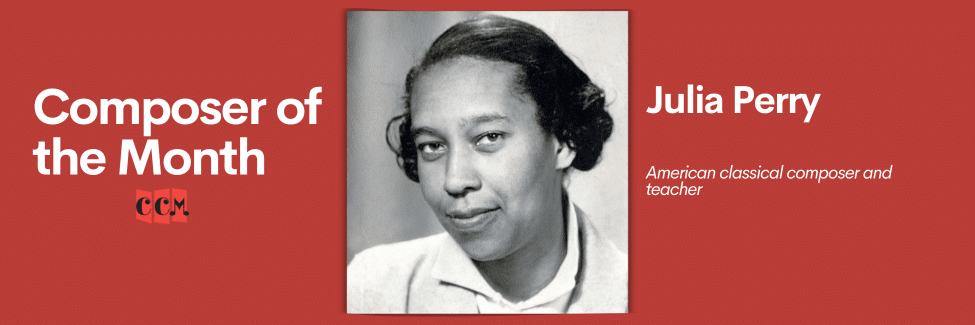
Every month offers a chance to discover a composer with a unique musical voice. March invites us to explore the music of Julia Perry, an important American composer. Her work blends emotional power, strong structure, and bold creativity. Furthermore, her story reflects determination and artistic courage.
Julia Perry built a career during a difficult time for many composers. As a Black woman in classical music, she faced barriers everywhere. However, she never allowed those barriers to silence her ideas. Instead, she created music that felt dramatic, expressive, and deeply personal. Moreover, Perry wrote with clarity and purpose. She often focused on strong musical shapes and clear emotional arcs. Her pieces combine modern harmony with older traditions. As a result, her music feels both bold and grounded.
Students and young musicians can learn much from her story. Perry showed how discipline and creativity work together in music. She also demonstrated that perseverance matters in every artistic path. Her music reminds us that important voices sometimes emerge despite great challenges. For these reasons, Julia Perry deserves attention in every discussion of American composers. Her music offers rich lessons about creativity, resilience, and musical imagination.
Early Life and Inspirations
Julia Perry was born in Lexington, Kentucky, in 1924. Her family later moved to Akron, Ohio. Music surrounded her childhood from an early age, as church music played a major role. Perry sang in church choirs and quickly developed a love for music. She also studied piano and violin while growing up. These early studies built a strong foundation for her future work. Additionally, they helped her understand music from both performer and composer perspectives.
Her teachers soon recognized her musical talent and curiosity. They encouraged her to continue serious study. Perry later attended Westminster Choir College in Princeton. There she studied voice and composition. This experience strengthened her musical discipline. She continued her education at the Juilliard School. Juilliard exposed her to advanced composition training and important musical ideas. She studied with respected composers and developed her own voice. These experiences shaped her approach to form and structure.
Perry also spent time studying in Europe. She worked with famous teacher Nadia Boulanger in Paris. Boulanger influenced many twentieth-century composers. Under her guidance, Perry refined her musical language and compositional technique. Furthermore, Perry admired composers such as Stravinsky and Bartók. Their rhythmic energy and bold harmonies left clear impressions. However, she never copied their styles directly. Instead, she absorbed their ideas and developed her own musical identity. These early experiences built the foundation for Perry’s artistic life. They gave her technical skill, creative confidence, and strong musical discipline.
Perry’s Music Career
Julia Perry began building her professional career during the 1950s. This period marked a time of intense creativity for her. She composed orchestral works, chamber music, and vocal pieces. Furthermore, many orchestras began performing her compositions. Her music quickly gained attention in the United States and Europe. Critics often praised her strong sense of structure and drama. Additionally, audiences noticed the emotional power in her works. Perry wrote music that felt direct and expressive.
Perry also received important fellowships and awards. These honors allowed her to travel and continue studying abroad. She spent several years in Europe developing new projects. During this time, she completed many important works. Despite her growing reputation, Perry still faced serious obstacles. The classical music world often excluded women composers. Furthermore, racial prejudice created additional barriers. However, Perry continued writing music with determination.
Her work appeared on major concert programs throughout the decade. Orchestras performed pieces such as Stabat Mater and her symphonic works. These performances helped introduce her music to wider audiences. Later in life, Perry experienced serious health challenges. She suffered a stroke in the late 1950s. The stroke affected her speech and physical movement. However, she refused to abandon her creative work. Instead, she slowly returned to composing. She continued writing music with patience and resilience. This perseverance shows the strength of her artistic commitment.
Perry’s career reminds us that composers often face difficult circumstances. Yet strong dedication can sustain creativity through those challenges.
Unique Aspects of Perry’s Music
Julia Perry’s music stands out for its strong structure and dramatic energy. She often built pieces around clear musical shapes. These shapes gave her music direction and intensity. She ultimately favored compact forms with powerful emotional impact. Many listeners notice the rhythmic strength in her compositions. Perry frequently used driving rhythms and bold accents. These rhythms create momentum and tension within her music. Additionally, they reflect influences from modern twentieth-century composers.
However, Perry also valued traditional musical forms. She wrote works inspired by classical symphonic structures. Moreover, she explored forms such as cantatas and orchestral suites. This combination of tradition and innovation defines her style. Another unique aspect involves her treatment of melody. Perry often wrote melodies that feel direct and expressive. These melodies rise and fall with dramatic intensity. As a result, they communicate emotion clearly to listeners.
Furthermore, Perry enjoyed writing for the human voice. She understood vocal expression deeply because she studied voice herself. Her vocal works combine expressive melodies with strong orchestral writing. This balance creates powerful dramatic moments. Perry also explored themes of spiritual reflection and human struggle. Many of her works draw inspiration from religious texts. These themes add emotional depth and seriousness to her music.
Moreover, she believed music should communicate clearly with audiences. She avoided unnecessary complexity in her compositions. Instead, she focused on clarity, structure, and emotional honesty. These qualities make her music memorable and impactful. They also reveal her commitment to expressive and meaningful composition.
Notable Works and Musical Themes
Julia Perry wrote many impressive works throughout her career. Several compositions stand out for their artistic importance. One of her most famous works is Stabat Mater. This piece combines choir and orchestra in a dramatic setting of a sacred text. The music expresses sorrow, devotion, and spiritual reflection. Perry shaped the piece with powerful choral writing and strong orchestration. Furthermore, the work demonstrates her mastery of vocal music.
Another important piece is her Symphony in One Movement. This orchestral work highlights Perry’s interest in concentrated musical form. Instead of several movements, the entire symphony unfolds continuously. The structure feels tight, energetic, and dramatic.
Additionally, Perry wrote several short orchestral works called Short Pieces for Orchestra. These pieces explore different moods and musical ideas. Each piece focuses on rhythm, color, and expressive contrasts. Her orchestral writing often features bold brass and rhythmic strings. These textures create a sense of motion and intensity. Moreover, Perry used strong dynamic contrasts to shape musical drama.
Religious and spiritual themes appear often in her music. Perry felt drawn to sacred texts and spiritual ideas. These influences reflect her early church experiences. They also reveal her interest in emotional storytelling through music. Furthermore, many works explore struggle and resilience. These themes mirror her personal experiences as a composer. Her music often moves between tension and release. This dramatic movement creates emotional depth. These notable works show the range of Perry’s musical imagination. They also reveal her dedication to expressive and thoughtful composition.
Final Thoughts
Julia Perry remains an important voice in American classical music. Her compositions reflect strength, imagination, and emotional clarity. Furthermore, her life story demonstrates courage and perseverance. She built her career during a challenging historical period. Yet she refused to allow obstacles to define her path. Instead, she continued developing her musical voice with determination.
Moreover, Perry’s music offers valuable lessons for young musicians. Her work shows how structure and emotion can work together. It also demonstrates the power of persistence in artistic growth. Students who study her music gain more than historical knowledge. They encounter music that communicates clearly and passionately. Her compositions remind us that creativity thrives through discipline and courage.
Additionally, her story expands our understanding of American musical history. Many composers shaped that history, yet some voices received less recognition. Highlighting Julia Perry helps restore balance to that narrative. Today, performers and scholars continue rediscovering her music. Each new performance introduces audiences to her expressive style. As more musicians explore her works, her influence continues to grow.
For these reasons, Julia Perry deserves recognition as a composer of lasting importance. Her music invites listeners to experience drama, beauty, and resilience. Furthermore, her legacy inspires the next generation of musicians. By studying composers like Julia Perry, we celebrate creativity in all its forms. We also honor the determination that fuels artistic achievement. Through her music, Perry continues speaking to audiences today.
Schedule your FREE introductory music lesson at The California Conservatory of Music today!
Building a Positive Music Routine
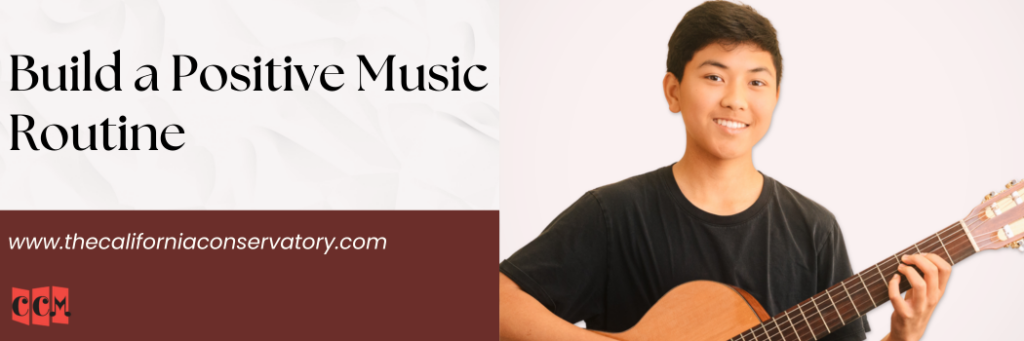
Starting music lessons brings excitement and hope. Parents imagine growth, discipline, and confidence. Children imagine sound, creativity, and expression. However, the way practice fits into daily life often shapes the outcome. A healthy music routine builds joy instead of pressure. Therefore, families must approach practice with intention and care.
The reasons students quit music lessons often relate to feeling overwhelmed or controlled, not because they dislike music. When practice feels forced, resentment can grow quickly. Yet when practice feels structured and encouraging, progress feels satisfying. In fact, small changes in approach can shift everything. A thoughtful music routine helps children connect effort with achievement.
Furthermore, music education offers long-term benefits. It strengthens focus, patience, and emotional awareness. However, those benefits only appear when the process feels supportive. Parents must balance accountability with warmth. Teachers must guide without intimidation. Together, they create an environment where music becomes part of life rather than a burden.
Start with Clear Expectations
First, families need realistic expectations. Progress in music takes time and repetition, as children rarely master pieces in a single week. Therefore, adults should focus on consistency rather than perfection. A balanced music routine values steady effort over dramatic leaps. Additionally, parents should clearly define practice goals. For example, five focused days each week work better than random sessions. The truth is, clear goals reduce conflict at home. Children understand what success looks like, and consequently, practice feels manageable rather than endless.
Next, be sure to communicate why lessons matter. Explain how music builds discipline and confidence. Share stories of musicians who improved through steady work. When children understand the purpose, they cooperate more willingly. Eventually, motivation shifts from external pressure to internal pride.
Keep Practice Short and Focused
Next, examine the length of each session. Long, unfocused practice often leads to frustration. In contrast, short, deliberate sessions create progress. Ten focused minutes often beat thirty distracted minutes. A well-designed music routine protects attention and energy. To ensure a focused practice, break practice into segments. Begin with a warm-up, then review familiar material. After that, you can tackle the challenging section slowly. Finally, end with something enjoyable. This sequence keeps emotions balanced throughout all practice sessions.
Additionally, use timers when needed. A timer removes negotiation from the process. Children see a clear beginning and end. As a result, they feel more control, which reduces resistance.
Protect the Emotional Climate
Practice should never feel like punishment. Avoid phrases that compare siblings or classmates. Instead, focus on individual growth. A positive emotional climate strengthens a child’s relationship with music. In fact, frustration often signals learning. When a child struggles, pause calmly, and ask what feels difficult, then guide them through one small solution. A supportive music routine teaches problem-solving rather than fear.
Also, make sure to celebrate effort more than outcome. Praise careful work, even when mistakes remain. Mistakes show that learning is stretching the brain. When children see mistakes as part of growth, they persist longer, and that is key.
Partner with the Teacher
Next, stay connected to your child’s teacher in a consistent and intentional way. Ask how much practice fits your child’s current level, and request clarification whenever assignments feel unclear. When teachers and families communicate openly, they create alignment, and that alignment strengthens the entire music routine at home.
Additionally, encourage your child to speak directly with the teacher during lessons. When students ask questions and express concerns, they begin taking ownership of their progress. That ownership builds motivation because it shifts responsibility inward rather than outward. Ultimately, teachers appreciate engaged learners, and open communication benefits everyone involved.
Finally, attend recitals and studio events whenever possible. Performance goals often inspire steady practice because students understand what they are working toward. Watching peers perform also builds community and perspective. Instead of feeling isolated, students see themselves as part of a shared musical journey.
Balance Structure with Choice
Furthermore, offer small choices within a clear structure so practice feels guided rather than imposed. For example, let your child decide which piece to warm up with or which section to review first. While the overall expectation remains firm, these small decisions create agency. When children feel involved in the process, they invest more fully in the outcome.
In fact, autonomy often prevents resentment before it begins. Children resist when they feel controlled, yet they cooperate when they feel heard. A thoughtful music routine balances consistency with flexibility so that expectations feel fair rather than rigid.
Also, pay attention to your child’s musical interests. Perhaps they love movie themes, pop melodies, or jazz rhythms. When teachers weave familiar songs alongside foundational repertoire, students connect more deeply to the instrument. Blending structure with personal taste supports long-term engagement without sacrificing growth.
Normalize Plateaus
Later, expect periods when progress seems slow. Every musician experiences plateaus, even professionals. Growth often happens beneath the surface as coordination and understanding develop quietly. Therefore, reassure your child during these quieter phases and remind them that consistency still matters.
Moreover, draw parallels to other disciplines your child understands. Athletes repeat drills daily, and writers revise drafts again and again. Musicians refine small details with similar patience. A resilient music routine accepts these natural cycles rather than fearing them.
Additionally, track milestones in visible ways. Keep a simple chart or journal that marks improvements and completed pieces. When students see progress documented over time, they recognize growth that may otherwise feel invisible. That recognition strengthens commitment and builds confidence.
Keep the Long View
Eventually, remember the larger goal behind music education. While performances and recitals matter, personal development matters more. Music teaches patience, attentive listening, discipline, and perseverance. These qualities strengthen a child’s overall development.
Furthermore, your child’s relationship with music should remain positive over time. If practice begins damaging that relationship, adjust quickly and thoughtfully. Flexibility protects long-term joy, and joy sustains lifelong musicianship.
A sustainable music routine should feel steady rather than stressful. It should challenge without overwhelming and guide without controlling. When families approach practice with balance and intention, children thrive not only as musicians but as growing individuals.
Bringing It All Together
In summary, building a positive music routine requires clarity, compassion, and consistency. It requires structure without rigidity and encouragement without pressure. When families combine realistic expectations with emotional support, practice becomes part of daily life rather than a daily struggle.
First, establish steady habits. Next, protect the emotional climate. Then, collaborate with teachers and invite thoughtful autonomy. Over time, these habits shape resilience, confidence, and musical skill.
At The California Conservatory of Music, we walk alongside families through this process. Our teachers help students develop habits that encourage growth without resentment. We believe music should inspire rather than intimidate. When children experience steady guidance and encouragement, they develop both strong musicianship and lasting self-belief.
If you want your child to enjoy steady progress and meaningful confidence, we invite you to learn more about our programs. Together, we can build a music routine that supports growth for years to come. Schedule your free music lesson at The California Conservatory of Music today!